The beginning of November is meaningful to many cultures.
Across cultures, the beginning of November is a time for remembrance, spirituality, and celebrating the lives of those who came before us.
As October comes to an end, Halloween decorations begin to disappear, costumes are put away, and the excitement of the season slowly fades.
But in many parts of the world, the days immediately following Halloween hold a deeper significance.
November 1 and 2 are associated with traditions that honor saints, remember departed loved ones, and celebrate the enduring connection between the living and the dead.
In Haiti, there is Fèt Gede. In Mexico, families observe Día de Muertos, or the Day of the Dead. And within the Catholic tradition, these dates mark All Saints' Day and All Souls' Day.
Although these observances share a place on the calendar, each has its own history, beliefs, and cultural identity.
Together, they offer a fascinating look at the many ways people remember those who came before them.
All Saints' Day: November 1
All Saints' Day is a Christian observance celebrated in the Catholic Church on November 1.
The day honors all saints, including those who are not individually recognized or named in the Church's calendar.
For Catholics, it is a time to reflect on lives of faith, holiness, and devotion.
Church services, prayers, and religious gatherings are among the ways the occasion is observed.
While All Saints' Day primarily focuses on honoring the saints, it also begins a period of remembrance closely associated with those who have died.
All Souls' Day: November 2
The following day, November 2, is All Souls' Day.
In Catholic tradition, this day is dedicated to praying for the faithful departed, particularly those believed to be undergoing purification before entering heaven.
Families may attend Mass, visit cemeteries, place flowers on graves, and light candles in memory of loved ones.
For many people, All Souls' Day is also an opportunity for quiet reflection.
It is a reminder that remembering someone can be an act of love, even long after their passing.
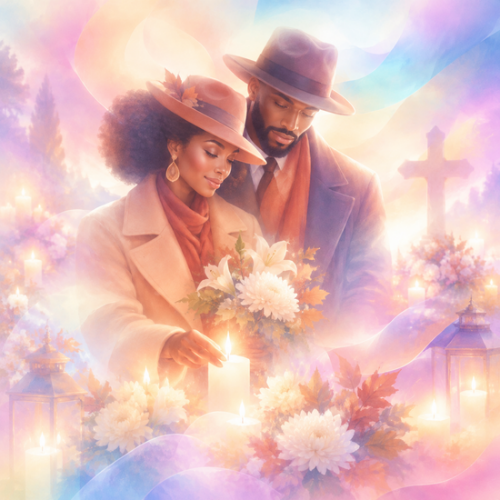
All Saint’s Day and All Soul’s Day are days of reflection.
Fèt Gede: Haiti's Festival of the Dead
In Haiti, November 1 and 2 are also associated with Fèt Gede, an important celebration rooted in Haitian Vodou.
Fèt Gede honors the dead and the Gede, a family of spirits known as lwa who are associated with death, ancestry, fertility, and regeneration.
Among the most recognizable figures are Bawon Samdi (Baron Samedi) and Manman Brijit (Maman Brigitte).
Fèt Gede reflects Haiti's rich spiritual history, including the preservation and transformation of African religious traditions across generations.
Although its dates coincide with the Catholic observances of All Saints' Day and All Souls' Day, Fèt Gede is a distinct spiritual tradition.
A Celebration Filled With Symbolism
Black, purple, and white are commonly associated with Fèt Gede.
During public observances, participants may wear distinctive clothing, hats, sunglasses, and other accessories associated with the Gede spirits.
Cemeteries become important gathering places where practitioners honor the dead through prayers, offerings, and ceremonies.
Traditional drumming, singing, and dancing may also be central to the celebration.
One particularly recognizable element is the banda dance, whose expressive movements reflect the Gede's associations with vitality, humor, and the continuation of life.
What makes Fèt Gede especially fascinating is the way solemn remembrance can coexist with exuberance.
The celebration acknowledges death while also affirming life.
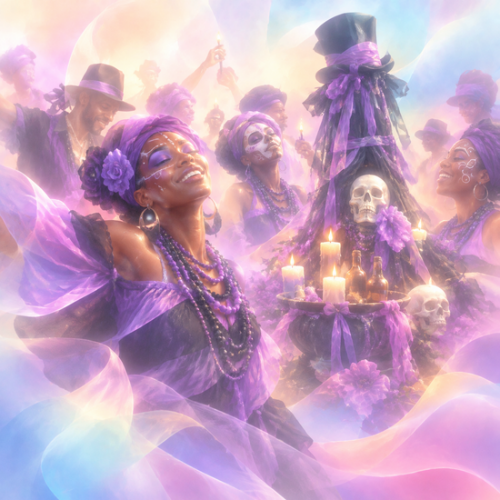
Fet Gede is a time for honoring.
Día de Muertos: Mexico's Day of the Dead
Across the Caribbean Sea, Mexico observes another remarkable tradition during the same period.
Día de Muertos, or Day of the Dead, is celebrated primarily on November 1 and 2, although preparations and observances may begin earlier.
The tradition reflects a complex history involving Indigenous Mexican practices and Catholic commemorations introduced during the colonial period.
Today, Día de Muertos is recognized internationally for its colorful decorations, symbolic offerings, and family-centered celebrations.
Welcoming the Memory of Loved Ones
One of the most recognizable features of Día de Muertos is the ofrenda, an altar created to honor deceased relatives and friends.
Families may decorate these altars with photographs, candles, favorite foods, personal belongings, and bright orange marigolds known as cempasúchil.
Traditional foods such as pan de muerto, a special sweet bread, are also associated with the occasion.
In many communities, families visit cemeteries, decorate graves, and gather to remember loved ones.
An important belief within many Día de Muertos traditions is that the souls of the departed temporarily return to visit the living.
Rather than treating remembrance only as a sorrowful occasion, families may celebrate the lives, personalities, and memories of those they miss.
The specific customs vary widely across Mexico's regions and communities.
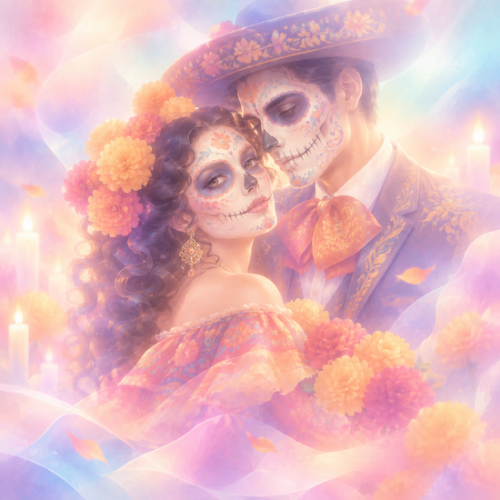
Día de Muertos is a time for family and friends to honor and remember the departed.
Different Traditions, Shared Themes
Although Fèt Gede, Día de Muertos, All Saints' Day, and All Souls' Day take place around the same dates, they should not be understood as interchangeable celebrations.
Each reflects a particular spiritual and historical context.
All Saints' Day honors the saints within Christianity.
All Souls' Day focuses on prayer for the faithful departed.
Fèt Gede is rooted in Haitian Vodou and honors the dead through traditions involving the Gede spirits.
Día de Muertos brings together distinct Mexican cultural and religious traditions to remember and symbolically welcome deceased loved ones.
Yet there is a meaningful connection among them.
Each, in its own way, acknowledges that death does not erase the importance of those who lived before us.
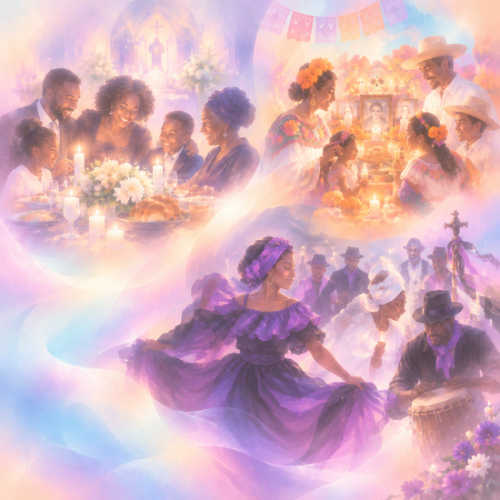
Celebrations on Nov 1st and 2nd.
The Role of Music, Food, and Community
One of the most interesting connections between these observances is the role that shared experiences can play in remembrance.
In Haiti, drumming, singing, and dancing are important expressions within many Fèt Gede ceremonies.
In Mexico, families may prepare favorite dishes, decorate altars, and gather in cemeteries or homes.
Within Catholic communities, prayers, hymns, candles, and church services create opportunities for collective remembrance.
These practices are not identical, but they demonstrate how cultural traditions can give people meaningful ways to honor the departed.
Music, food, storytelling, and gathering together can preserve memories across generations.
Remembering Those Who Came Before Us
Whether remembrance takes the form of a spiritual ceremony, a family gathering, a prayer, or a quiet moment of reflection, honoring the past can help us feel connected to our history.
Our ancestors and loved ones leave behind stories, traditions, values, and memories that continue to shape our lives.
Learning about different cultural observances also encourages us to appreciate the diversity of human experiences surrounding life and death.
The beginning of November offers more than a transition from Halloween into the final months of the year.
Across different cultures and faith traditions, it is a meaningful time to remember, reflect, and honor those who came before us.
From Haiti's Fèt Gede to Mexico's Día de Muertos, and from All Saints' Day to All Souls' Day, these observances remind us that remembrance can take many forms.
Some are quiet and prayerful. Others are colorful, musical, and filled with celebration.
Each carries its own meaning.
And perhaps that is what makes these traditions so powerful: they show us that even in the presence of loss, memory, culture, and love continue.
At Urban Sweet Spot, we celebrate the stories, histories, and cultural traditions that connect generations.
Check out this instrumental:
Baron Samedi 🎩🥀 Midnight in the Voodoo Forest 🌑🎻 | Atmospheric Gothic Chill